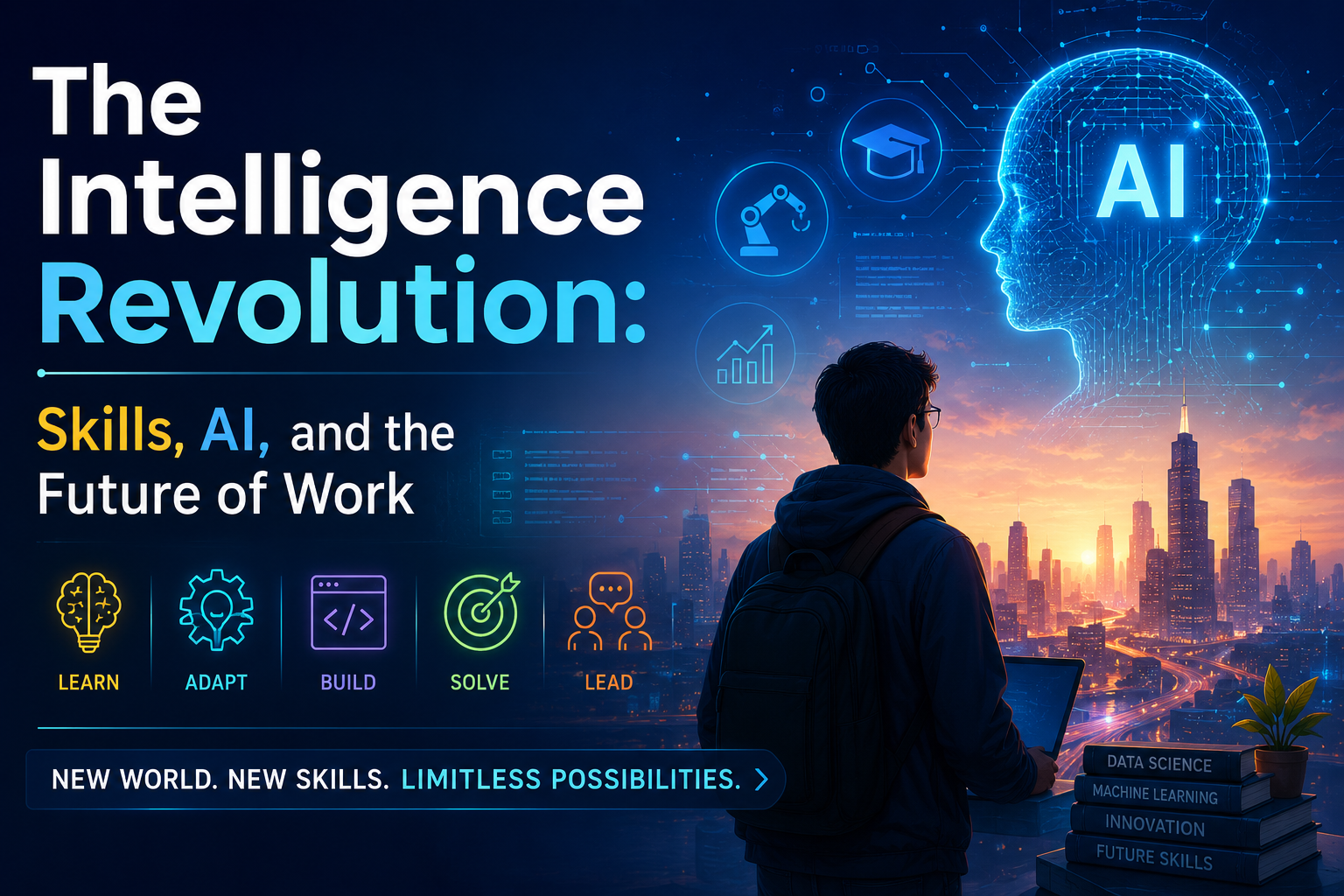
For years, students were told that a good degree was the key to a successful career. Study hard, get into a reputed college, earn your degree, and a good job would naturally follow. But the world is changing, and so are employers' expectations.
Today, companies are looking beyond certificates and marksheets. They want people who can solve problems, think creatively, adapt to new technologies, and contribute from day one. A degree may help you get noticed, but skills are what truly help you stand out.
In a rapidly changing world, continuous learning has become more important than ever.
Many people think of Artificial Intelligence (AI) as a futuristic technology, but the truth is that it has already become a part of our everyday lives.
When an online shopping app recommends products you may like, AI is working behind the scenes. When your email automatically filters spam messages, AI is making decisions. Voice assistants, navigation apps, online banking systems, and streaming platforms all use AI in different ways.
From healthcare and education to finance and agriculture, AI is helping industries become smarter, faster, and more efficient.
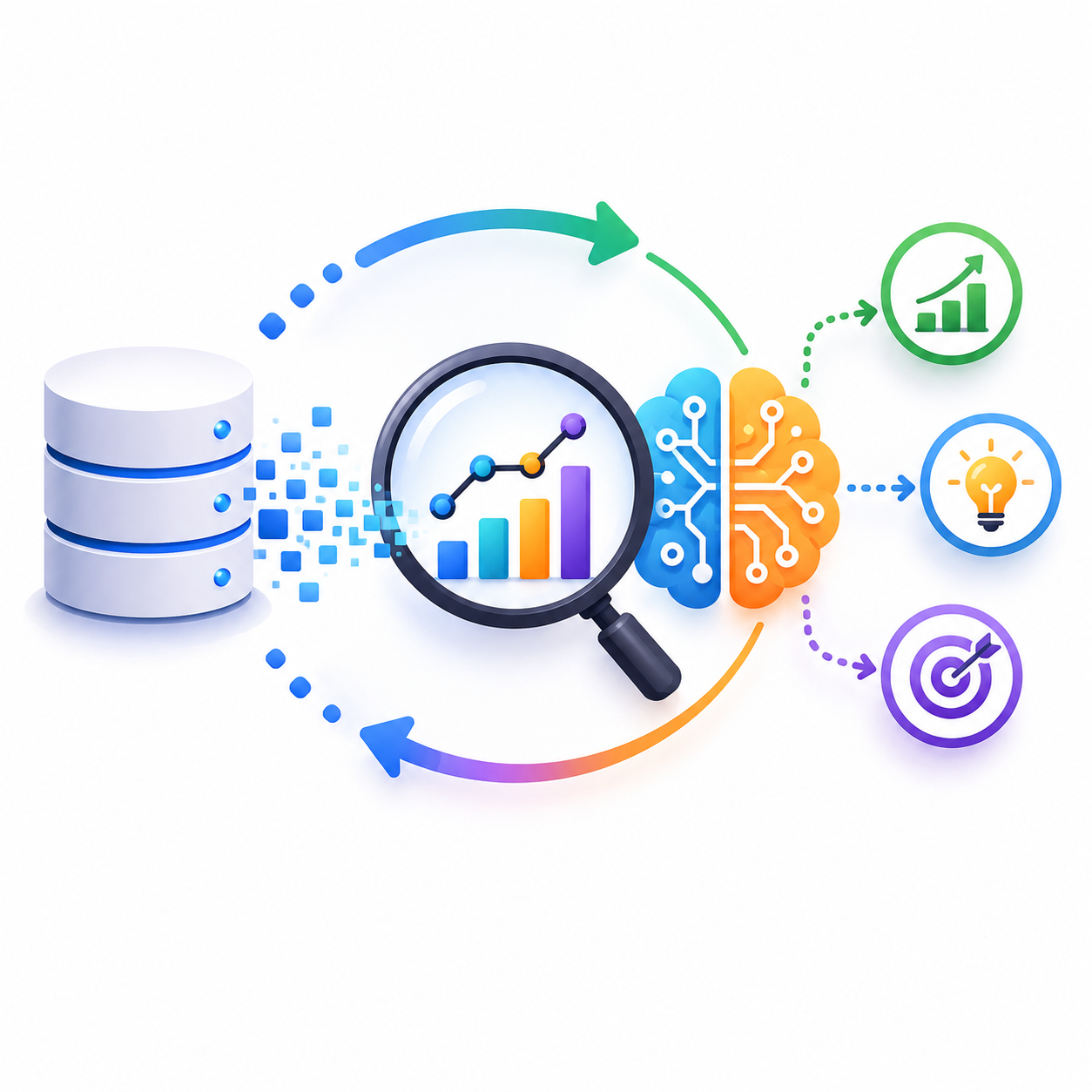
Machine Learning is one of the most important branches of Artificial Intelligence. Instead of following fixed instructions, machine learning systems learn from data and identify patterns on their own.
Think about how a child learns to recognize different animals. Nobody gives them a rulebook. They learn by seeing examples again and again. Machine learning works in a similar way.
This technology powers many of the systems we use every day, including recommendation engines, fraud detection systems, and email spam filters.
As AI evolved, researchers developed a more advanced approach called Deep Learning.
Deep Learning uses artificial neural networks inspired by the human brain. These networks process information through multiple layers, allowing computers to recognize faces, understand speech, and analyze images with impressive accuracy.
Some common applications include:
Deep Learning has made AI more powerful and capable of handling complex tasks that were once impossible for computers.
Traditional AI focuses on predicting outcomes. Generative AI goes a step further by creating entirely new content.
Today, AI can generate text, images, music, videos, and even computer code. Tools like ChatGPT, Gemini, and Claude have made this technology accessible to millions of users worldwide.
Whether it's writing a report, creating digital artwork, brainstorming ideas, or assisting with programming, Generative AI is transforming the way people work and learn.
Most modern AI chatbots are powered by Large Language Models (LLMs).
These models are trained using enormous amounts of information collected from books, websites, articles, research papers, and other sources. Instead of memorizing content, they learn patterns in language and use those patterns to generate responses.
One of the most impressive features of LLMs is their ability to adapt. The same concept can be explained differently to a child, a student, or a professional depending on the audience.
This makes AI an incredibly useful tool for communication and learning.
AI is not replacing human skills—it is changing which skills are most valuable.
People who understand how to use AI effectively can work faster, analyze information more efficiently, and improve their productivity. However, technology alone is not enough.
The most important skills for the future include:
The combination of human intelligence and AI tools creates the strongest advantage in today's workplace.
While AI offers incredible opportunities, it is important to use it responsibly.
AI systems can sometimes provide incorrect information, show bias, or generate misleading content. This is why users must always verify important facts and think critically about AI-generated outputs.
Some best practices include:
Responsible use of technology is just as important as understanding how it works.
A few decades ago, digital literacy became essential for success. Today, AI literacy is following the same path.
Not everyone needs to become an AI engineer or data scientist, but everyone should understand the basics of AI, how it works, where it is being used, and how it can be used effectively.
The future belongs to people who continue learning, adapt to change, and develop practical skills that complement technology.
Degrees will always have value, but in the age of AI, skills, curiosity, and continuous learning are what truly set people apart.